MONO-IRON HYDROGENASE
Background. The generation of dihydrogen (H2) as a chemical fuel is desirable as a sustainable and carbon-free fuel source. In fact, H2 can be generated from simple precursors: H2O and electrons. Currently, metallic platinum (Pt) is the best and most widely utilized catalyst for H2 generation. However, the low earth abundance and corollary high cost of Pt prohibits widespread, delocalized use of such a process.
Research in the Rose group is inspired by one of nature’s H2 utilizing enzymes: Mono-Iron Hydrogenase, often abbreviated HMD-H2ase. The enzyme is also known as “cluster-free” hydrogenase due to its lack of an [Fe4S4] redox cluster (unlike the di-iron and nickel-iron hydrogenases). Of all the transition metals, iron is the cheapest and most earth abundant. Therefore development of an inexpensive, reliable, Fe-based catalyst could alter the landscape of H2 production.
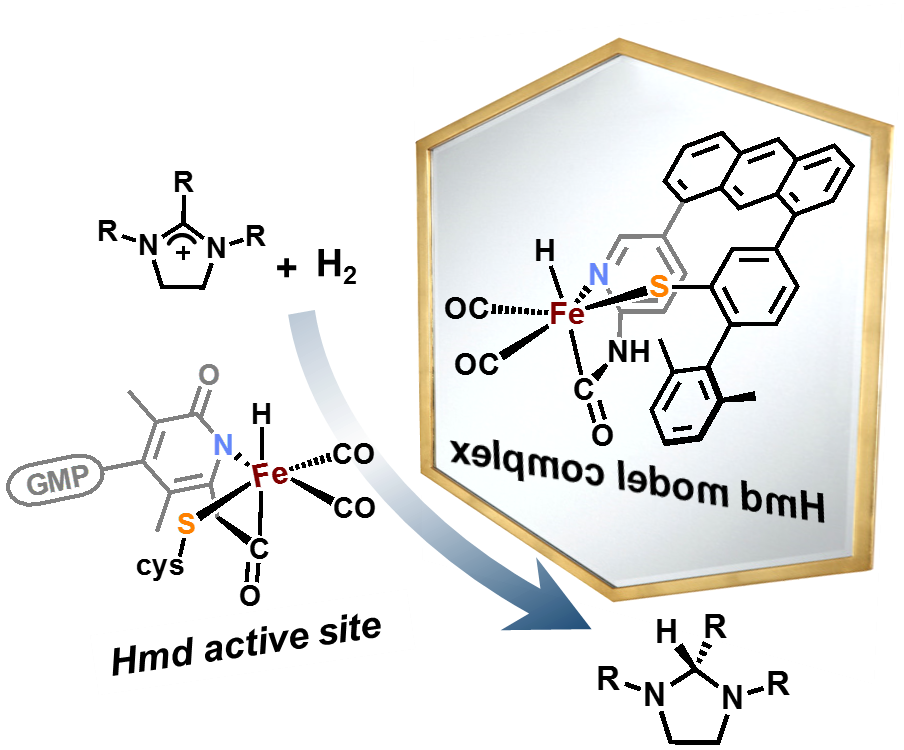
Our group uses the crystallographically characterized mono-Fe-H2ase active site as inspiration to prepare small molecule mimics of the enzyme.The enzyme active site presents a unique array of donors to the Fe center not yet found anywhere else in nature, including an N-bound pyridone cofactor and an unusual Fe-C(acyl) bond.
Scaffold-Based Ligand Design & In/Organic Synthesis. The rational design of scaffold-based ligands is a primary focus within the project. We use the resulting Fe complexes as structural and spectroscopic models to understand the properties and function of the Fe-H2ase active site. The wide variety of donor types and ligand architectures available through chemical synthesis is one particular advantage compared to the standard amino acids in a protein-based biochemical approach.
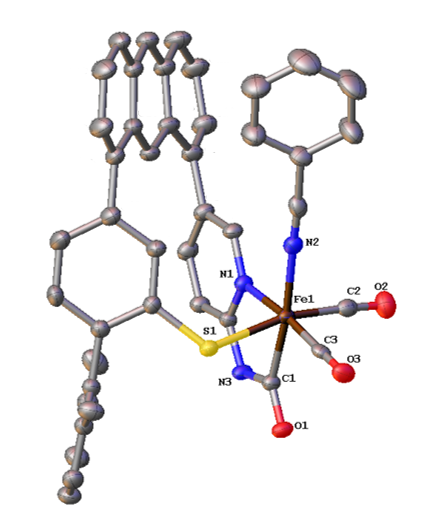
Dynamics & Flexibility. More recently, we have become interested in using our unique scaffold-based ligand design approach to probe the importance and effect of molecular dynamics and flexibility on reactivity at the metal center. In nature, proteins and metalloenzyme active sites are dynamic entities, and yet small molecule catalysts are historically rigid and non-dynamic. Much in the same way that the “second coordination sphere” of H-bonds and ionic contacts has been proven to be critical for understanding and modulating metal center reactivity, we believe that the “thematic third coordination sphere” is the extent of dynamic motion around the metal center that tunes its reactivity. The projects thus involve the synthesis of various flexible / dynamic scaffolds, preparation of Fe complexes thereof, and studying reaction rates and H2/D2 effects on kinetics to quantify the effect of dynamics on metal site reactivity.